
Tango Pools Journal
What a Custom Pool Proposal Should Define Before You Sign
A custom pool proposal should do more than name a pool and a price. It should help a homeowner understand what is being designed, what is included, which decisions remain open, and where property conditions may change the work.
Separate design from construction scope
Separate design from construction scope. In a custom poolscape, this matters because a rendering, site plan, and finish schedule may serve different purposes. Treat separate design from construction scope as a relationship among the water, finished surfaces, the house, and the way people actually occupy the property.
During design, identify drawings, selections, engineering coordination, permits, and construction tasks. Put that separate design from construction scope decision on the same current plan as connected elements so its effect can be reviewed instead of discussed in isolation.
A practical review should mark which deliverables are included and which require separate specialists. For a rendering, site plan, and finish schedule may serve different purposes, that creates a concrete record to compare when new information or alternatives appear.
The main caution is assuming every visual detail is automatically construction-ready. Within separate design from construction scope, final structural, code, safety, drainage, electrical, gas, or equipment choices still require the applicable project professionals.
Make the separate design from construction scope review property-specific by documenting how the team will identify drawings, selections, engineering coordination, permits, and construction tasks. Use a rendering, site plan, and finish schedule may serve different purposes to test that choice against connected work. Because assuming every visual detail is automatically construction-ready, record the missing information and its owner, then mark which deliverables are included and which require separate specialists before closing the decision.
Define the whole-property boundary
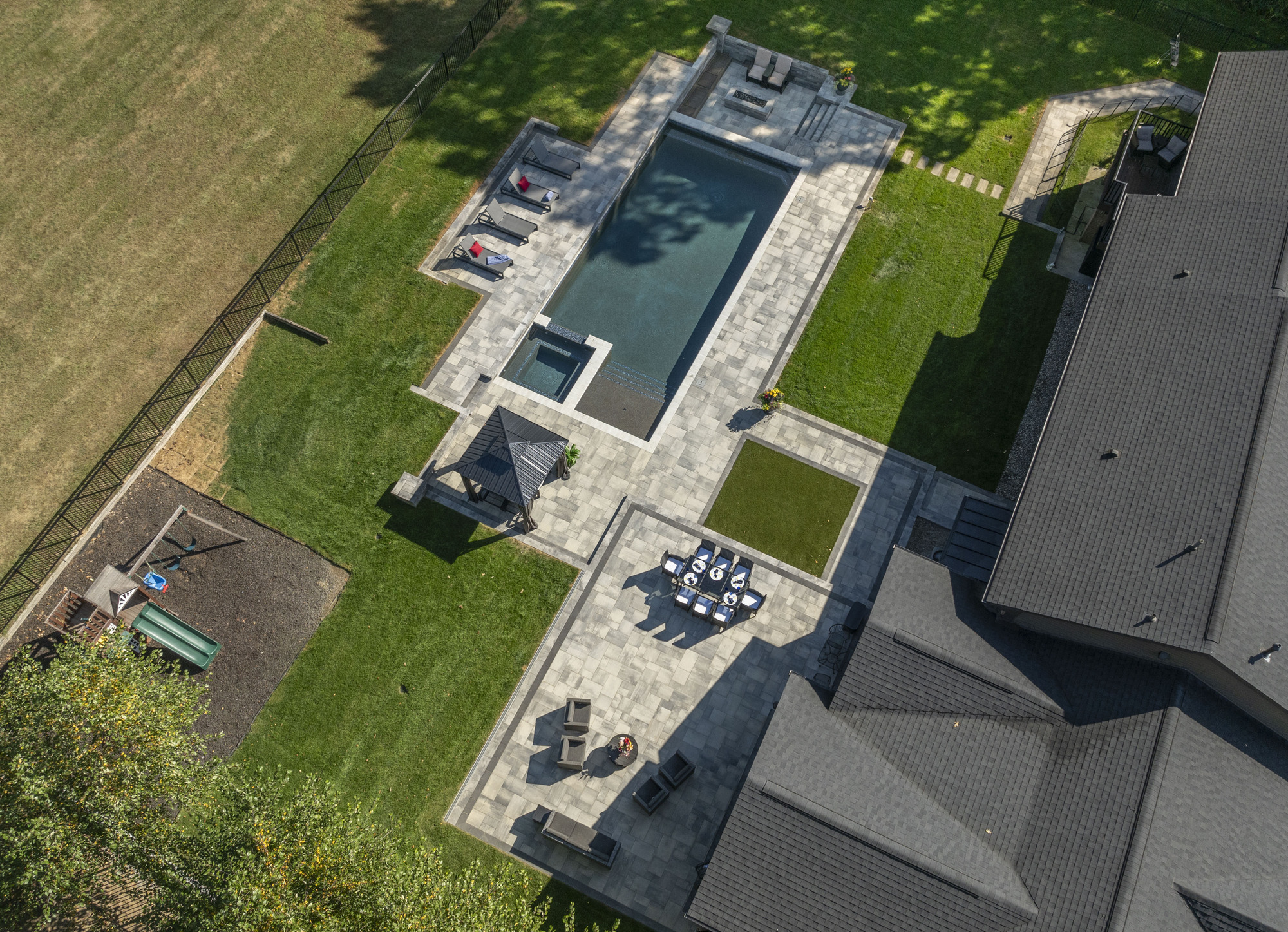
a terrace edge may depend on grade work outside the pool shell. That example shows why define the whole-property boundary belongs in the design conversation before the surrounding work is fixed.
The useful next step is to list pool shell, spa, patios, walls, structures, utilities, landscape, and restoration. Review define the whole-property boundary from normal arrival routes, indoor views, seated positions, and service access when those viewpoints apply.
Use the review to compare the written scope with the complete backyard shown in discussions. For this define the whole-property boundary question, a current drawing, marked photograph, sample set, or responsibility list is more dependable than a broad verbal assumption.
Avoid leaving adjacent work implied creates gaps between trades. The define the whole-property boundary goal is to expose the tradeoffs this site and household must resolve, not prescribe one universal answer.
Make the define the whole-property boundary review property-specific by documenting how the team will list pool shell, spa, patios, walls, structures, utilities, landscape, and restoration. Use a terrace edge may depend on grade work outside the pool shell to test that choice against connected work. Because leaving adjacent work implied creates gaps between trades, record the missing information and its owner, then compare the written scope with the complete backyard shown in discussions before closing the decision.
Make site assumptions visible
Make site assumptions visible. The issue becomes visible when buried utilities or restricted access may change a route. Those make site assumptions visible relationships can shape comfort, movement, appearance, and future service.
Ask the team to record survey, soil, access, utilities, drainage, and existing-condition information. The resulting make site assumptions visible answer should connect to verified property information and the rest of the whole-yard scope.
Then ask what happens when field conditions differ from early assumptions. That make site assumptions visible check helps when household members or specialists make related decisions at different times.
Do not rely on treating unknown conditions as fixed facts makes later decisions feel surprising. A make site assumptions visible concept can guide discussion, but the installed solution must follow current project-specific technical requirements.
Make the make site assumptions visible review property-specific by documenting how the team will record survey, soil, access, utilities, drainage, and existing-condition information. Use buried utilities or restricted access may change a route to test that choice against connected work. Because treating unknown conditions as fixed facts makes later decisions feel surprising, record the missing information and its owner, then ask what happens when field conditions differ from early assumptions before closing the decision.
Understand selections and allowances
Consider this condition early: understand selections and allowances. For example, coping, tile, fixtures, and masonry should be named at the right stage. Seeing that understand selections and allowances relationship on paper is easier than correcting it after permanent work is installed.
Build the review around one action: distinguish specified materials from placeholders and owner choices. Compare understand selections and allowances alternatives against the household’s priorities rather than an isolated trend or inspiration image.
Before closing the decision, track deadlines, decision owners, and the consequence of late selections. For understand selections and allowances, record what is confirmed, what remains an assumption, and who owns the next verification.
The common failure is choosing from a broad category without a defined level obscures scope. Keeping understand selections and allowances visible protects the larger composition while qualified professionals solve the technical details.
Make the understand selections and allowances review property-specific by documenting how the team will distinguish specified materials from placeholders and owner choices. Use coping, tile, fixtures, and masonry should be named at the right stage to test that choice against connected work. Because choosing from a broad category without a defined level obscures scope, record the missing information and its owner, then track deadlines, decision owners, and the consequence of late selections before closing the decision.
Read change language before changes happen
Read change language before changes happen. In a custom poolscape, this matters because a new wall or outdoor feature may affect several connected scopes. Treat read change language before changes happen as a relationship among the water, finished surfaces, the house, and the way people actually occupy the property.
During design, clarify how revisions are priced, approved, documented, and scheduled. Put that read change language before changes happen decision on the same current plan as connected elements so its effect can be reviewed instead of discussed in isolation.
A practical review should agree on who can authorize work and how effects are communicated. For a new wall or outdoor feature may affect several connected scopes, that creates a concrete record to compare when new information or alternatives appear.
The main caution is verbal additions can separate expectations from the written record. Within read change language before changes happen, final structural, code, safety, drainage, electrical, gas, or equipment choices still require the applicable project professionals.
Make the read change language before changes happen review property-specific by documenting how the team will clarify how revisions are priced, approved, documented, and scheduled. Use a new wall or outdoor feature may affect several connected scopes to test that choice against connected work. Because verbal additions can separate expectations from the written record, record the missing information and its owner, then agree on who can authorize work and how effects are communicated before closing the decision.
Check responsibilities and exclusions
landscape restoration may belong to the pool team, another contractor, or the owner. That example shows why check responsibilities and exclusions belongs in the design conversation before the surrounding work is fixed.
The useful next step is to identify permits, surveys, utilities, cleanup, protection, and third-party work. Review check responsibilities and exclusions from normal arrival routes, indoor views, seated positions, and service access when those viewpoints apply.
Use the review to turn exclusions into a responsibility list rather than ignoring them. For this check responsibilities and exclusions question, a current drawing, marked photograph, sample set, or responsibility list is more dependable than a broad verbal assumption.
Avoid an exclusion is not a problem when ownership is clear. The check responsibilities and exclusions goal is to expose the tradeoffs this site and household must resolve, not prescribe one universal answer.
Make the check responsibilities and exclusions review property-specific by documenting how the team will identify permits, surveys, utilities, cleanup, protection, and third-party work. Use landscape restoration may belong to the pool team, another contractor, or the owner to test that choice against connected work. Because an exclusion is not a problem when ownership is clear, record the missing information and its owner, then turn exclusions into a responsibility list rather than ignoring them before closing the decision.
Evaluate communication structure
Evaluate communication structure. The issue becomes visible when one current drawing set should govern decisions across the team. Those evaluate communication structure relationships can shape comfort, movement, appearance, and future service.
Ask the team to confirm meetings, progress updates, decision logs, and escalation contacts. The resulting evaluate communication structure answer should connect to verified property information and the rest of the whole-yard scope.
Then choose a process that matches the complexity of the property. That evaluate communication structure check helps when household members or specialists make related decisions at different times.
Do not rely on frequent messages are not the same as controlled information. A evaluate communication structure concept can guide discussion, but the installed solution must follow current project-specific technical requirements.
Make the evaluate communication structure review property-specific by documenting how the team will confirm meetings, progress updates, decision logs, and escalation contacts. Use one current drawing set should govern decisions across the team to test that choice against connected work. Because frequent messages are not the same as controlled information, record the missing information and its owner, then choose a process that matches the complexity of the property before closing the decision.
Turn the review into a clear next step
A useful proposal turns a beautiful idea into an understandable working scope. Before signing, ask for enough clarity to know what the team owns, what the homeowner must decide, and how new information will be handled.
For the next step on “What a Custom Pool Proposal Should Define Before You Sign,” review relevant service details, Tango Pools design process, project examples, private consultation. Use those pages to compare this custom pool proposal discussion with Tango Pools’ verified services and completed work; they provide project context, not campaign approval or a promise that one answer fits every property.