
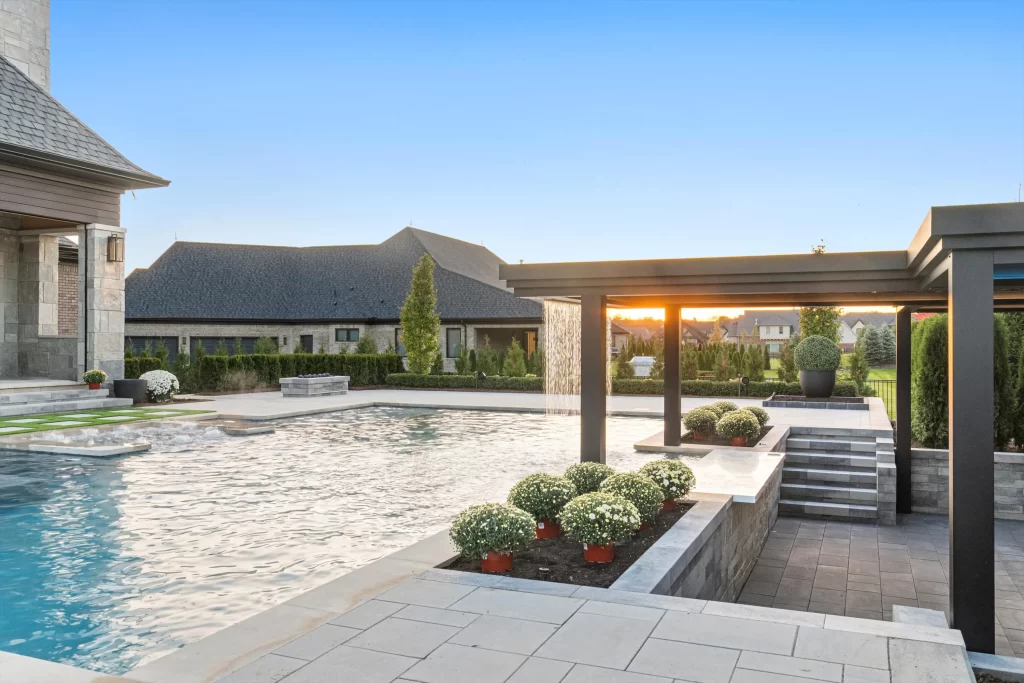
Gunite vs. Shotcrete: Choosing the Right Material for a Luxury Pool
Picking the right concrete method is a key decision in luxury pool construction — it affects appearance, longevity, and maintenance. Gunite and shotcrete are the two leading approaches; below we compare how they’re applied, how they perform over time, and how costs typically stack up, with practical notes for Michigan homeowners.
Gunite vs Shotcrete: Benefits, Costs & Durability Comparison
- Gunite and shotcrete are the primary methods for high-end pool shells.
- Gunite is a dry-mix spray offering precise on-site control for custom shapes.
- Shotcrete is a wet-mix spray that can speed placement on large, simpler shells.
- Gunite is favored for dense, durable shells and complex features.
- Shotcrete can achieve comparable strength with proper reinforcement.
- Gunite often costs more up front but can lower long-term maintenance.
- Shotcrete can reduce initial expense but may need more upkeep over time.
- Michigan projects should factor freeze-thaw exposure, winterizing, and desired customization.
- Consult an experienced pool contractor to match method to design and site.
Comparison of Gunite and Shotcrete for Luxury Pools
Definitions:
Both methods produce a reinforced concrete shell but differ in preparation and delivery. Gunite uses a dry cement-and-sand blend that is hydrated at the nozzle as it’s pneumatically applied to the rebar frame, giving tight control for bespoke forms. Shotcrete is delivered as a pre-mixed wet batch pumped and sprayed onto the structure, which can shorten placement time on larger, straightforward shells.
Application Processes:
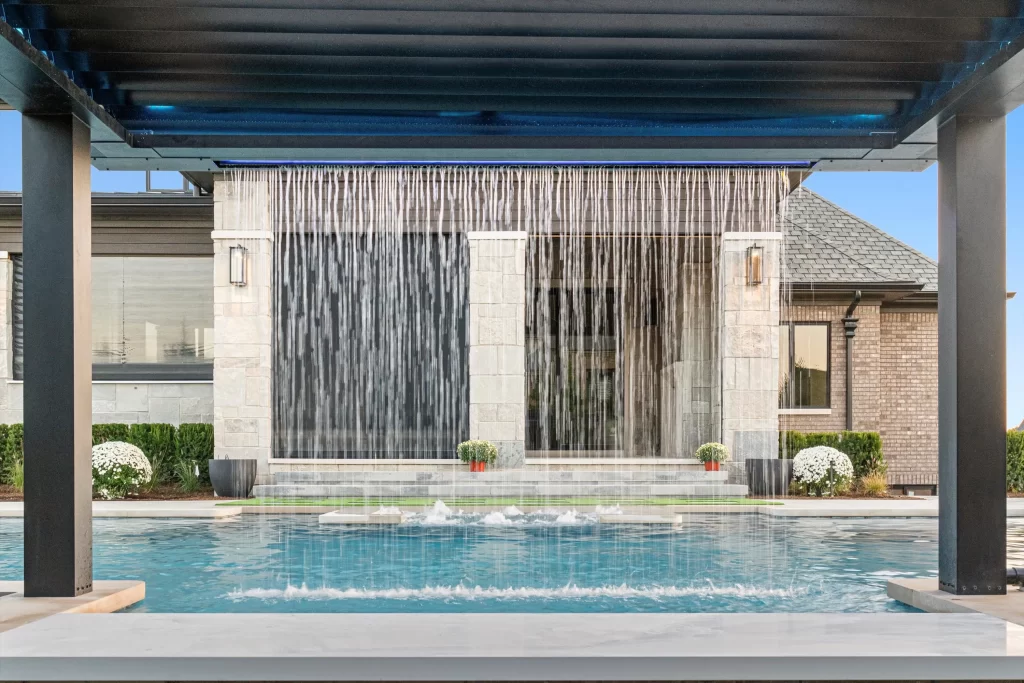
Gunite crews set rebar and forms, then spray the dry mix while the nozzle operator meters water to control consistency. Shotcrete crews pump a wet mix to the nozzle for faster coverage. Both require skilled operators; gunite often demands more on-site craftsmanship for intricate contours.
Durability:
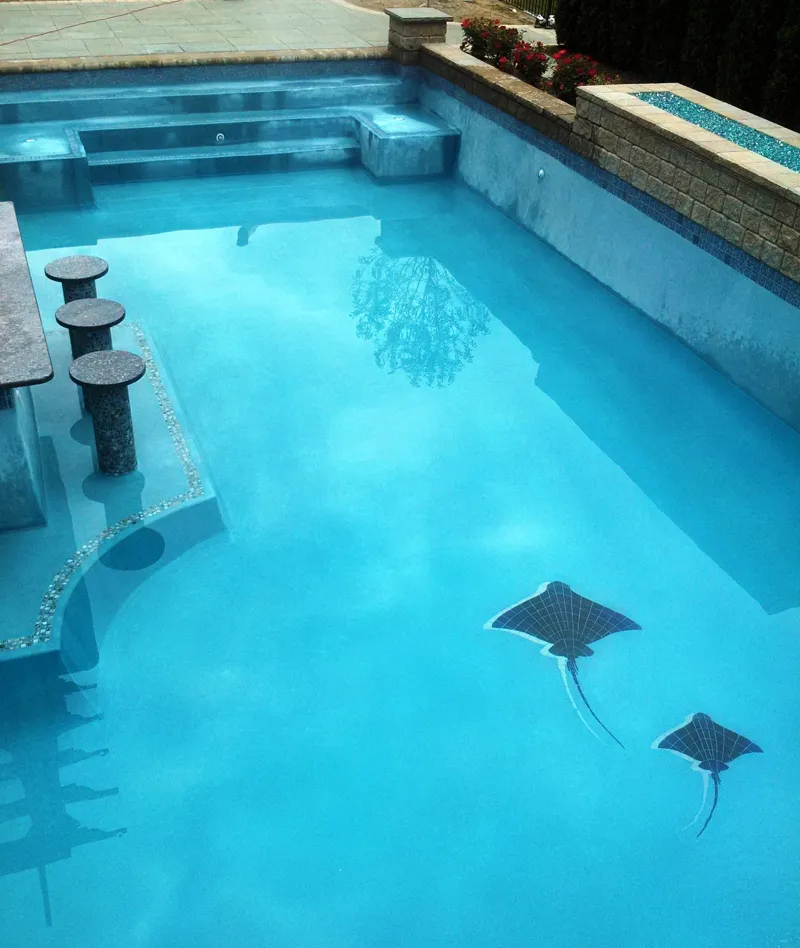
Properly installed, both methods yield long-lived shells. Gunite’s dense, compacted finish resists freeze-thaw cycles and heavy use, making it popular in high-end builds. Shotcrete is also durable; for extreme exposure or complex details, gunite’s application can offer an extra margin of toughness.
Structural Integrity:
Gunite’s dry-spray technique tends to form a monolithic shell with excellent bond to rebar, supporting complex features and load-bearing elements. Shotcrete can match this performance when engineered with adequate reinforcement or thicker sections. Correct design and installation are essential for either method.
Cost Differences:
Gunite generally incurs higher labor and skilled-operator costs due to its precision-driven process, but many owners find the initial investment pays off through durability and lower maintenance. Shotcrete can reduce upfront cost and shorten the shell phase, though lifecycle maintenance should be included in budgeting.
| Pool Type | Initial Cost | Long-Term Value | Maintenance Needs |
|---|---|---|---|
| Gunite | Higher | Better | Lower |
| Shotcrete | Lower | Moderate | Higher |
This table summarizes typical differences in initial investment, long-term value, and maintenance expectations between the two methods.
Guidance on Selecting the Best Option for Luxury Pool Construction in Michigan
Prioritize durability, climate resilience, and the level of customization you want. For elaborate shapes, waterfalls, or integrated features, gunite’s flexibility is a strong advantage. For large, simpler shells where schedule and initial cost matter, shotcrete is practical when designs include proper reinforcement. Always account for Michigan’s freeze-thaw cycles and winterizing needs.
For tailored advice, consult professionals familiar with both materials and regional conditions. Tango Pools specializes in custom luxury pool design and construction and can recommend the best approach for your site and goals.
What Are Gunite and Shotcrete Pools? Definitions and Construction Processes
What Is Gunite?
Gunite pools use a dry-mix spray that is hydrated at the nozzle and applied over rebar, enabling detailed shaping and a dense final surface. This method suits complex contours and long-term resilience, which is why it’s common in custom luxury projects.
What Is Shotcrete?
Shotcrete pools are formed with a wet-mix concrete pumped and sprayed onto the structure. The pre-hydrated mix allows faster placement and efficient coverage on larger areas; designers should plan reinforcement carefully for elaborate or load-bearing features.
Key Differences Between Gunite and Shotcrete
The principal distinctions are application method, customization potential, and cost profile. Gunite offers greater on-site control and flexibility for intricate designs, while shotcrete can reduce labor time and up-front expense. Choose based on whether customization or initial budget is the priority, and confirm engineering details with your contractor.
Frequently Asked Questions
1. What are the maintenance requirements for gunite and shotcrete pools?
Both require regular cleaning and balanced water chemistry. Gunite’s denser surface tends to need fewer repairs; shotcrete can be equally durable but may demand more attention if reinforcement is minimal.
2. How do climate conditions affect the choice between gunite and shotcrete?
Climate matters. Gunite’s dense shell performs well in freeze-thaw environments common in Michigan. Shotcrete performs well with the right mix design and reinforcement, but extra precautions should be taken in harsh climates.
3. Can gunite and shotcrete pools be customized in terms of shape and design?
Yes. Gunite allows more freedom for complex shapes and carved details; shotcrete can be shaped too but is generally better suited to simpler geometries unless additional detailing is planned.
4. What is the average lifespan of gunite and shotcrete pools?
With proper installation and maintenance, gunite pools commonly last 30 years or more. Shotcrete pools also have strong lifespans but may require repairs more frequently depending on installation quality and exposure.
5. Are there any environmental considerations when choosing between gunite and shotcrete?
Gunite’s dry-mix application can reduce material waste through precise placement; shotcrete’s batching is efficient but may produce excess if overpumped. Both require water for curing, so consider local water use and conservation practices.
6. How do installation times compare between gunite and shotcrete pools?
Shotcrete typically enables faster placement and can shorten the shell-building phase. Gunite is more labor- and skill-intensive and may take longer, especially for intricate forms.
7. What are the best practices for ensuring the longevity of a luxury pool?
Use quality materials, hire experienced contractors, maintain balanced water chemistry, clean filters and surfaces regularly, perform seasonal inspections, and winterize properly in cold climates. A tailored maintenance plan will maximize lifespan.
Conclusion
Both gunite and shotcrete are viable for luxury pools but serve different priorities: choose gunite for maximum customization and long-term durability, and shotcrete for faster placement and lower upfront cost on simpler designs. Discuss trade-offs with an experienced contractor to match method, site, and budget.
Conclusion
Weigh climate, customization, and lifecycle costs to select the method that fits your goals. For expert guidance and a site-specific recommendation, reach out to Tango Pools for professional support through design and construction.