
Professional Pool Care Plans & Services
Keeping a pool safe, clean, and swim-ready takes more than skimming. Professional maintenance plans give homeowners reliable service—from regular cleanings and chemical care to seasonal openings and equipment checks. Below we explain services to expect, the benefits of routine upkeep, and how seasonal plans protect your pool year‑round. We also cover opening and closing, equipment inspection, and chemical balancing so you know what a professional provider delivers.
Key Takeaways
- Professional pool maintenance keeps your pool safe, clean, and enjoyable for your family.
- Services range from custom pool construction to ongoing maintenance tailored to each home.
- Typical offerings include weekly cleaning, scheduled maintenance, and on-demand repairs.
- Routine care extends equipment life and can boost property value.
- Seasonal plans adjust services for regional climate needs to keep pools ready year-round.
- Opening and closing services protect the pool during seasonal transitions.
- Regular equipment inspections help prevent costly breakdowns and keep systems efficient.
- Chemical balancing and water testing maintain safe, clear water for swimmers.
- In Michigan, monthly maintenance costs commonly fall between $75 and $250, depending on services selected.
Key Insights into Professional Pool Maintenance Services
Professional pool care includes routine cleaning, custom design, technical support, and seasonal packages. Trained technicians ensure water quality, spot equipment issues early, and keep your pool running efficiently — saving time and avoiding unexpected expenses.
Types of Services Offered
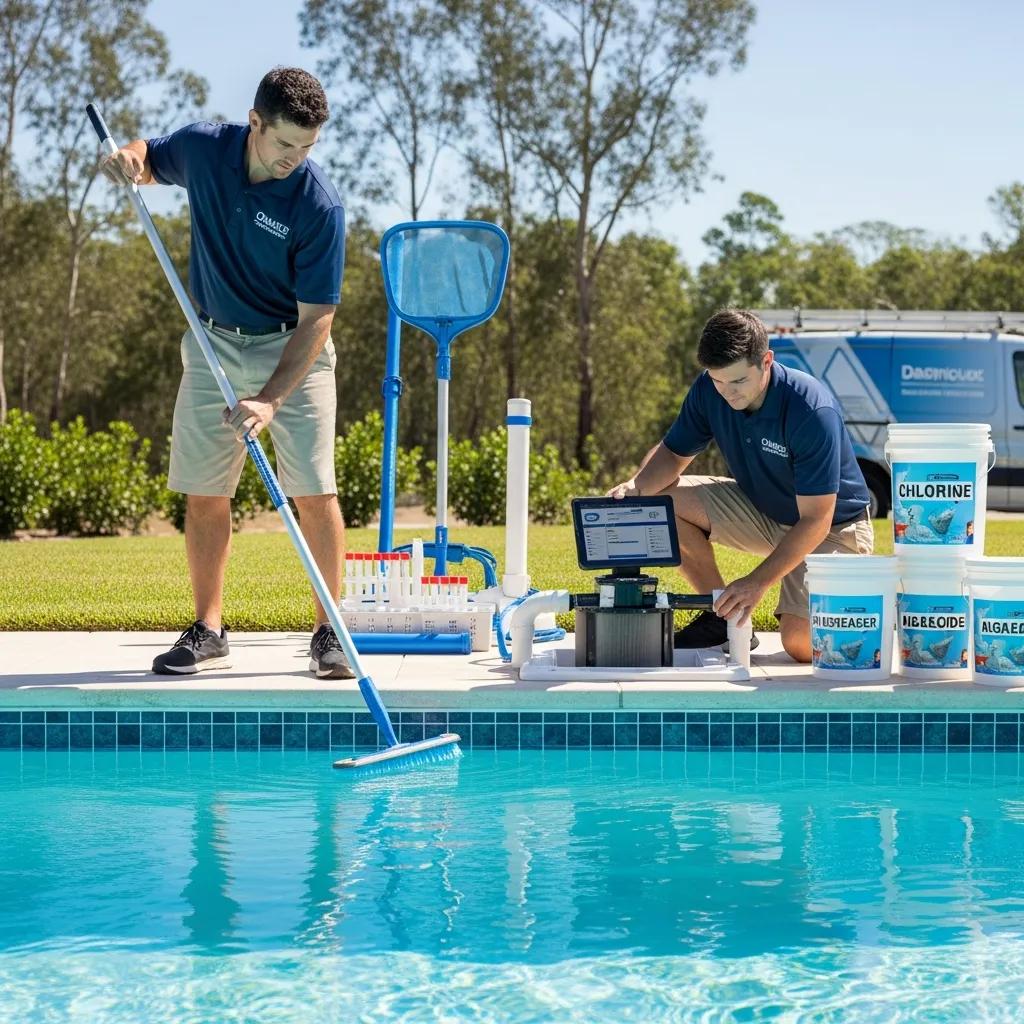
Knowing the common service options makes it easier to choose the right plan. Here are the typical services most pool companies provide:
| Service Type | Description | Frequency |
|---|---|---|
| Weekly Pool Cleaning | Skimming, brushing, vacuuming and debris removal to keep water clear | Weekly |
| Monthly Pool Maintenance | Deeper checks and tune-ups — filter cleaning, chemical review, and system inspection | Monthly |
| Pool Equipment Repair | Diagnose and repair pumps, filters, heaters, and other mechanical systems | As needed |
These options can be combined to suit your pool’s size, usage, and budget so it stays in top condition.
Benefits of Regular Maintenance

Routine maintenance delivers practical benefits beyond curb appeal. Key advantages include:
- Longer Equipment Life: Regular service catches small issues early, helping pumps, filters, and heaters last longer.
- Safer Water for Swimmers: Consistent cleaning and chemical balance reduce bacteria and algae risks.
- Improved Property Appeal: A well-kept pool enhances the look and marketability of your home.
Investing in scheduled upkeep helps you avoid larger repairs and keeps your pool ready whenever you want to use it.
Seasonal Pool Maintenance Plans
Seasonal plans adapt care to local weather — crucial in places with cold winters or variable climates like Michigan. Typical seasonal services include:
Weather patterns often shape when and how pools should be maintained throughout the year.
Seasonal Pool Maintenance & Climate-Informed Management
Research examining historical climate data showed that weather information can improve decisions about seasonal maintenance and operations for outdoor pools in urban northeastern Illinois. For pool companies, weather affects timing for maintenance tasks (including painting), safe open dates, and how extended hot periods change operating hours.
Enhancing swimming pool management decisions with climate information, 2002
- Winterization: Drain or treat lines, secure covers, and protect equipment from freeze damage.
- Spring Start-Up: Clean, inspect, and balance water to reopen safely after winter.
- Fall Preparation: Close and protect the pool to prevent freeze-related problems.
Using the right winterization techniques helps prevent damage and saves money on long-term repairs.
Residential Pool Winterization Practices
In regions where freezing occurs, pools are winterized to remove vulnerable water and protect systems from ice-related damage — steps that help reduce lifecycle impacts on the pool and equipment.
Life cycle environmental implications of residential swimming pools, N Forrest, 2010
Seasonal care keeps the pool structurally sound and functional, so it’s ready when you are.
Pool Opening and Closing Services
Proper openings and closings are essential to seasonal pool health. A typical opening includes:
- Removing and storing the pool cover
- Cleaning the pool and surrounding deck
- Inspecting, starting, and testing equipment
Closing services generally involve:
- Draining or lowering water where appropriate to prevent freezing
- Adding recommended winter chemicals
- Installing and securing a winter cover
Handled correctly, these services prevent damage and make the next season’s start much easier.
Key Pool Equipment Inspection and Repair Services
Regular equipment checks keep systems efficient and avoid expensive failures. Common inspection and repair tasks include:
- Filtration System Checks: Verify filters and skimmers are clean and operating properly.
- Pump Performance Tests: Measure pump operation to ensure good circulation without wasted energy.
- Leak Detection: Find and repair leaks to prevent water loss and structural damage.
Addressing these items promptly reduces downtime and repair costs.
Chemical Balancing and Water Testing
Maintaining correct chemical levels is central to safe, clear water. Best practices include:
- Water Testing Methods: Regularly check pH, chlorine, alkalinity, and other key measures.
- Recommended Frequency: Test at least once a week during peak season; more often if the pool sees heavy use.
- Regulatory Compliance: Follow local health guidelines for water quality when applicable.
Consistent testing and adjustment keep swimmers safe and reduce the chance of algae or cloudy water.
Frequently Asked Questions
What are the signs that my pool needs maintenance?
Cloudy or foul-smelling water, persistent debris, strange pump noises, fluctuating water levels, or algae growth are signs you need maintenance. Regular pH and chlorine checks can reveal issues that require professional attention.
Can I perform pool maintenance myself?
Homeowners can handle skimming, brushing, and water-level checks. Accurate chemical balancing, diagnosing equipment faults, and complex repairs are best left to trained technicians; professionals have the tools and experience to avoid costly or unsafe mistakes.
How do seasonal changes affect pool maintenance?
Seasons change pool needs: winterization for cold climates, spring start-ups, summer cleaning and balancing, and fall closings. Planning for each season helps prevent damage and control costs.
What should I look for in a professional pool maintenance service?
Choose a company with experience, good reviews, and a clear service list. Ensure they’re licensed, insured, provide transparent pricing, and communicate schedules and work. A reliable provider will offer tailored plans, timely responses, and local references.
How can I improve the efficiency of my pool equipment?
Keep filters clean and follow regular maintenance so the pump doesn’t overwork. Fix leaks promptly and consider energy-efficient upgrades like variable-speed pumps to reduce energy use.
What are the environmental benefits of professional pool maintenance?
Proactive maintenance reduces excess chemical use, lowers energy consumption through efficient equipment, and prevents water waste from leaks — benefiting swimmers and local waterways.
Conclusion
Regular professional maintenance keeps your pool safe, attractive, and ready to use. Routine service protects your investment and reduces long-term costs. Choose a plan that fits your schedule and climate so your pool stays in peak condition. Explore our service options to find the right care.